Candles Dropshipping
Candles dropshipping is worth testing only when the order still makes money after delivery, damage, refunds, and customer acquisition. A large supplier-to-retail markup is not enough. We would launch a narrow test with sampled products; we would not build a broad “candle brand” around an unverified
Candles dropshipping is worth testing only when the order still makes money after delivery, damage, refunds, and customer acquisition. A large supplier-to-retail markup is not enough. We would launch a narrow test with sampled products; we would not build a broad “candle brand” around an unverified revenue screenshot.
That caution is evidence-led. The strongest dropshipping cases in ProvenStartups show that sales volume is possible, but the supplied evidence does not disclose candle-specific profit. The honest opportunity is a testable product thesis—not a proven shortcut.
Table of contents
The margin math first
Start with contribution margin, not the supplier-to-retail markup. A candle order must pay for the product, shipping, payment fees, refunds, replacements, discounts, and customer acquisition before it pays you. If the remaining cash cannot absorb a broken shipment or another ad test, the category is not ready to scale.
Build the calculation in this order:
- ·Revenue collected after discounts
- ·Minus product and fulfillment cost
- ·Minus transaction costs
- ·Minus expected support, refund, and replacement cost
- ·Minus the cost of acquiring the order
The adjacent AI solo e-commerce case claimed $180K in 30 days, sourcing at $7 and selling at $45 for roughly 550% gross margin. It is creator-relayed and graded [U] unverified, so it demonstrates an attractive markup claim—not dependable profit or candle demand.
Use that case as a warning. Even its headline “gross margin” excludes costs that decide whether dropshipping candles produces durable cash.

Cases with real figures
The evidence supports online selling and audience monetization, but it does not prove a candle playbook. Only the dropshipping cases are operationally adjacent, and neither supplies verified candle-level net profit. The comparison matters because a big figure becomes misleading when its business model, metric, or evidence class is stripped away.
| ProvenStartups case | Disclosed result | Evidence quality | What it tells a candle seller |
|---|---|---|---|
| Shopify AI Store Generator + Zendrop | $1.7M cumulative sales, stated as GMV rather than profit | [F] founder-reported | A store can generate substantial volume; profit and candle economics remain undisclosed. |
| AI solo e-commerce | Claimed $180K in 30 days; $7 source cost, $45 sale price, about 550% gross margin | [U] unverified | Useful for a markup hypothesis, unsafe as a forecast. |
| AI slow-English podcast channel | Benchmark channel estimated at $11K–$31K per month in ad revenue share | [C] creator-relayed | Digital attention can monetize without fulfillment; it is not physical-product proof. |
| Elder-wisdom AI-avatar YouTube niche | Reference channel had about 850,000 views in the last month; creator estimated roughly $8,500 per month at about $10 RPM | [C] creator-relayed | Traffic economics are not candle unit economics. |
| Cal AI in the evidence-graded project directory | $25M per year net | [V] third-party verified | Strong evidence, but for a different product and business model. |
The takeaway is deliberately narrower than the headlines: commerce can scale, but none of these figures establishes what a candle order will cost to acquire, ship, or replace.
Where physical goods bite
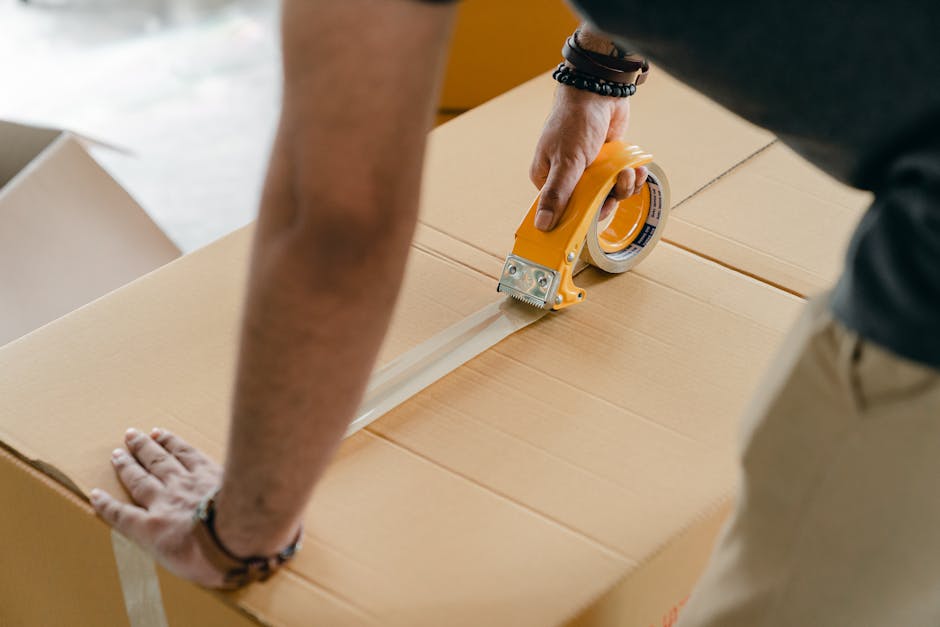
Physical goods fail in places a gross-margin screenshot cannot show: inconsistent scent, weak packaging, slow delivery, heat exposure, breakage, address errors, and supplier stockouts. The supplier may fulfill the parcel, but your brand still owns the customer’s disappointment and the cost of making it right.
Shopify’s dropshipping documentation explains the supplier-fulfillment model, but outsourcing fulfillment does not outsource accountability. Sample every product and packaging combination before advertising it.
This is why the $1.7M cumulative GMV in the Shopify/Zendrop case, graded [F] founder-reported, cannot answer the profit question. GMV measures sales passing through the store; it does not disclose what survived fulfillment, ads, and refunds.
Handmade vs sourced
Choose handmade for control and differentiation; choose sourced candles for speed and lower operational involvement. We prefer handmade only when the maker can charge for a distinctive product and tolerate production complexity. We prefer sourced inventory only after the supplier passes product, packaging, delivery, and replacement tests.
- ·Handmade: stronger story, customization, and quality control; harder production and capacity planning.
- ·Sourced: faster catalog testing and less hands-on fulfillment; weaker differentiation and more supplier dependence.
Candles sit inside the broader physical-product idea landscape, but they should not inherit assumptions from every adjacent category. Compare the merchandising lessons in home décor on Shopify and the fit, return, and catalog issues in clothing dropshipping, then model candle-specific failure points separately.
What we would actually do
We would start with one buyer, one occasion, and a tightly related product set—not a wall of interchangeable scents. The goal is to discover whether a clear promise can earn an order at a survivable acquisition cost. Only then would we expand variants or commit to stocked inventory.
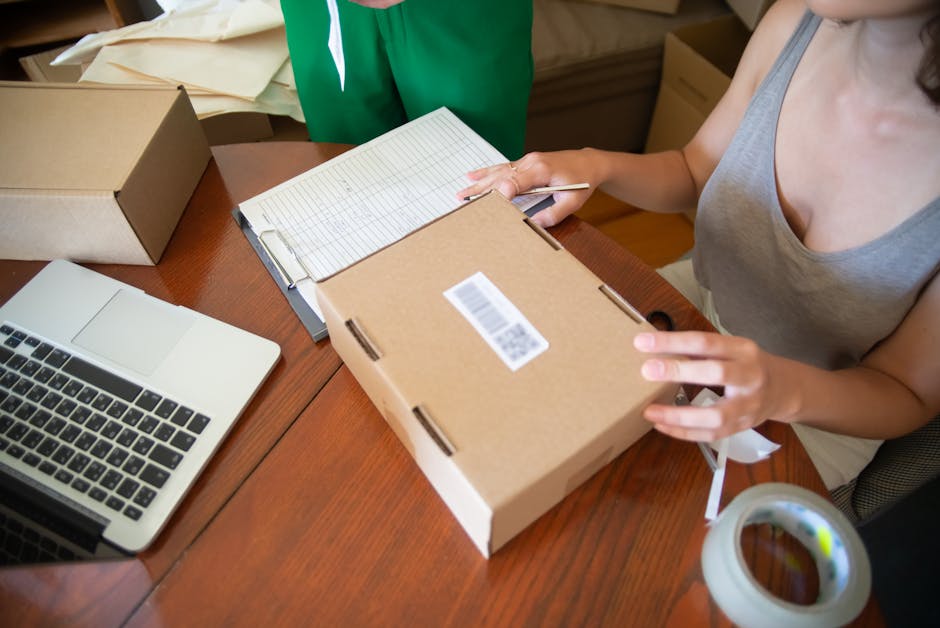
- ·Order samples to different addresses and inspect the product, label, box, and delivery experience.
- ·Record the real contribution margin for every test order, including replacements.
- ·Build the offer around an occasion or identity rather than “premium candles.”
- ·Test supplier response time before trusting the supplier with customer problems.
- ·Move a proven winner toward better packaging or controlled inventory if economics justify it.
Use the SBA business-plan guide to document the customer, operations, and cash assumptions. If someone sells a done-for-you candle “opportunity,” review the FTC Business Opportunity Rule guide before accepting earnings claims.
We would refuse to treat the unverified $7-to-$45 spread and claimed 550% gross margin, graded [U], as a launch budget or profit forecast.
Where the numbers stop being trustworthy
Trust ends when a figure loses its metric, timeframe, source, or evidence grade. [V] means third-party verified; [F] is founder-reported; [C] is creator-relayed; [U] is unverified. A precise-looking claim does not become reliable merely because it includes revenue, views, or a margin percentage.
Our own data contradicts the popular “easy high-margin product” pitch. The most relevant dropshipping evidence is only $1.7M cumulative GMV [F] and $180K in 30 days [U]—not verified candle profit. Meanwhile, the strongest figure here, Cal AI’s $25M per year net [V], belongs to a different business entirely.
That gap is the decision. Test candles because your unit economics and positioning survive scrutiny, not because an adjacent case produced an exciting headline.
FAQ
The short answers are cautious because the supplied cases do not disclose candle-specific startup cost, time to profit, or verified net margin. That missing data is not a reason to avoid testing. It is a reason to cap the test, measure contribution margin, and reject anyone presenting estimates as established results.
Is this still worth doing in 2026?
Yes, as a controlled product test—not as a passive-income plan. The category is worth doing when samples are good, the offer is differentiated, and paid or organic acquisition leaves positive contribution margin. The $1.7M cumulative GMV [F] case supports testing e-commerce demand, but it does not validate candle profit.
What does it cost to start?
No defensible universal startup cost was disclosed in the supplied candle evidence. Your real starting requirement is the cost of samples, storefront operations, creative testing, customer acquisition, and a reserve for refunds or replacements. Set a loss limit before launch; do not reverse-engineer a budget from the $180K-in-30-days [U] claim.
How long until it makes money?
No trustworthy candle-specific timeline was disclosed. It makes money only after collected revenue exceeds product, delivery, transaction, support, replacement, and acquisition costs consistently. Judge progress by profitable orders and repeatable fulfillment, not elapsed time. If those economics do not improve during a capped test, stop rather than waiting for scale to rescue them.