Pet Products Dropshipping
Pet products dropshipping can work, but only when you treat it as a margin-and-positioning problem—not a shortcut to easy income. Emotional buyers and giftable products help; shipping, refunds, advertising, and undifferentiated catalogs hurt.
Pet products dropshipping can work, but only when you treat it as a margin-and-positioning problem—not a shortcut to easy income. Emotional buyers and giftable products help; shipping, refunds, advertising, and undifferentiated catalogs hurt.
Our view is strict: refuse the broad “everything for pets” store. Start with one audience, one problem, and one offer whose contribution margin survives a realistic return. Revenue screenshots alone cannot answer that question, which is why every case below keeps its evidence grade attached.
Table of contents
The margin math first
The first calculation is contribution margin per delivered order: selling price minus product cost, shipping, payment fees, expected refunds, and customer-acquisition cost. If that result is fragile before overhead, pet product dropshipping is not viable. We would reject any product whose economics require unusually cheap ads or customers never returning it.
Model each candidate with four lines:
- ·Revenue: what the customer actually pays after discounts.
- ·Fulfillment: product, packaging, shipping, and supplier charges.
- ·Leakage: payment fees, refunds, replacements, and disputes.
- ·Acquisition: the blended cost of winning the order.
This prevents the category’s most common sleight of hand: presenting sales as earnings. Shopify AI Store Generator + Zendrop Dropshipping produced $1.7M in cumulative sales from one store (GMV, not profit) [F]. That founder-reported figure proves substantial transaction volume, not a durable net margin.
Use Shopify’s own dropshipping documentation to understand the operating model, but build your economics from supplier quotes and your actual order data. Shopify explains the machinery; it does not certify your opportunity.

Cases with real figures
The strongest available numbers do not validate a generic pet-products catalog. They show that clear utility and repeatable distribution can create large revenue elsewhere, while the closest pet-specific case discloses no revenue. That contradiction matters more than forcing unrelated success stories into a bullish conclusion about dropshipping pet products.
| Case | Disclosed result | What it actually supports |
|---|---|---|
| ElevenLabs | $125M/yr [V] | Verified scale for a software product, not pet retail |
| Peptide Tracker App | $11K MRR ($51K total revenue in 7 weeks) [V] | Verified demand for a narrow, urgent utility |
| Sprout, formerly PrepearAI | $250K/mo MRR (revenue-share basis) [V] | Verified distribution with an important revenue-model qualifier |
| Breed-Specific AI Print Apparel Store | Potential [F] | A plausible pet niche, but no disclosed revenue figure |
| Shopify AI Store Generator + Zendrop Dropshipping | $1.7M in cumulative sales from one store (GMV, not profit) [F] | Founder-reported sales volume only |
The takeaway is not that software beats physical products by definition. It is that the verified cases connect a narrow need to a legible offer. For pet product dropshipping, the equivalent is “travel gear for anxious senior dogs,” not “pet accessories.”
Where physical goods bite
Physical goods punish mistakes after the sale. A supplier can ship late, substitute an item, provide weak tracking, or deliver quality that differs from the listing. You still own the customer relationship. The $250K/mo MRR (revenue-share basis) [V] reported for Sprout does not carry these inventory-adjacent failure points.
The pressure points are predictable:
- ·Bulky beds and feeders can lose their margin in shipping.
- ·Sizing-dependent harnesses and apparel invite exchanges.
- ·Breakable, chewable, or safety-sensitive goods create higher support risk.
- ·Commodity toys make price comparison effortless.
- ·Long delivery windows undermine gifting and repeat trust.
That is why we would favor lightweight, easy-to-demonstrate products with few variants and no safety-critical promise. A seductive product page cannot repair a fulfillment system you do not control.

Handmade vs sourced
Choose handmade or print-on-demand when differentiation is the core value; choose sourced products when function, availability, and fulfillment consistency are the advantage. Handmade offers story and defensibility but demands labor. Sourced pet product dropshipping is easier to launch, yet exposes you to copycats and supplier dependence.
| Model | Best advantage | Main constraint |
|---|---|---|
| Handmade | Originality and customization | Production capacity |
| Print-on-demand | Niche creative testing | Quality and per-unit economics |
| Sourced dropshipping | Catalog speed | Sameness and fulfillment control |
The breed-specific apparel case is only Potential [F], with no disclosed revenue figure. Treat it as a testable concept, not proof. If customization is not your edge, compare adjacent models in dropshipping clothing and home-decor Shopify stores before committing.
What we would actually do
We would launch a tightly framed pet offer, order the product ourselves, and test the entire customer journey before buying meaningful traffic. We would not publish supplier copy unchanged, sell safety-critical goods, or trust a dashboard labeled “revenue” without reconciling refunds, shipping, fees, and advertising.
The operating sequence is simple:
- ·Pick a recognizable owner-and-pet situation, not merely a species.
- ·Shortlist products that are light, demonstrable, and difficult to mis-size.
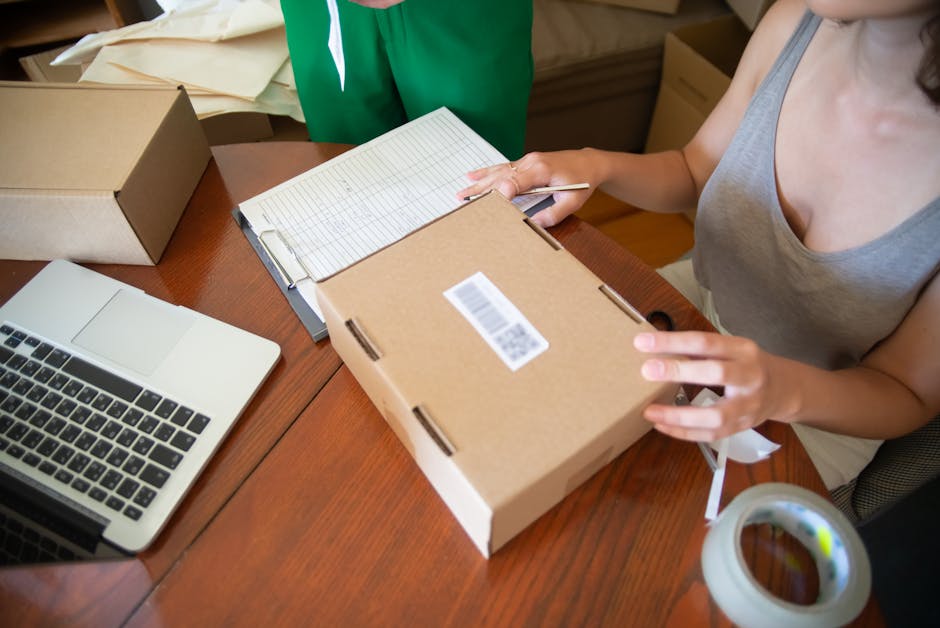
- ·Buy samples from the exact supplier and shipping route customers will receive.
- ·Create original photos, instructions, and a clear delivery promise.
- ·Validate willingness to buy before expanding the catalog.
- ·Track contribution margin by product and acquisition source.
Write the assumptions down using the SBA’s business-plan guide. Read the FTC Business Opportunity Rule guide before relying on earnings claims from a seller or program.
Speed alone is not the benchmark. The Peptide Tracker App reached $11K MRR ($51K total revenue in 7 weeks) [V] because the case had a narrow utility and verified figures. A physical store should earn confidence through controlled tests, not borrow that software timeline.
Where the numbers stop being trustworthy
A figure becomes less useful when its source, accounting basis, or product relevance weakens. ProvenStartups preserves those boundaries: $125M/yr [V] for ElevenLabs is strongly evidenced but category-distant; $1.7M in cumulative sales from one store (GMV, not profit) [F] is category-relevant but founder-reported and incomplete.
Read the grades literally:
- ·[V] means third-party verified.
- ·[F] means founder-reported.
- ·[C] means creator-relayed.
- ·[U] means unverified.
No grade turns GMV into profit. Browse the broader physical-product ideas and the complete startup idea directory, but compare evidence class, business model, and revenue definition before comparing headline figures.
FAQ
Pet products dropshipping deserves a test only when the product has a specific buyer, credible fulfillment, and positive contribution margin under conservative assumptions. The available evidence does not justify guaranteed budgets or timelines. Treat missing cost, profit, and payback data as missing—not as permission to invent optimistic estimates.
Is this still worth doing in 2026?
Yes, as a focused validation project; no, as a generic catalog assembled from trending products. The strongest dropshipping-adjacent disclosure is $1.7M in cumulative sales from one store (GMV, not profit) [F]. It demonstrates possible sales volume while leaving profitability unproven, so your own delivered-order economics decide the answer.
What does it cost to start?
No trustworthy startup-cost figure was disclosed in the supplied cases, so we would not publish a fake minimum. Budget for samples, storefront operations, creative production, customer support, refunds, and acquisition testing. The right starting amount is enough to test fulfillment and demand without depending on immediate sales to cover personal expenses.
How long until it makes money?
There is no disclosed, trustworthy profitability timeline for a pet dropshipping store in these cases. The Peptide Tracker App recorded $11K MRR ($51K total revenue in 7 weeks) [V], but that verified software result is not a physical-retail forecast. Define success as positive contribution margin first; recover startup costs only after that result repeats.